

Welcome to Our Heartwarming Music Store!
I'm Tamara Belland, and my friend and piano accompanist, Patsy Rose, and I have had the pleasure of performing songs from years gone by for residents of retirement communities throughout Eastern Iowa.
We've recorded some of our favorites to share with you!
Songs They Don’t Play Anymore... But Should!
Six songs worth remembering and singing again.
Enjoy these beloved melodies on your own or sing along with your friends and loved ones.
The Complete Collection — $7.50
Special price for seniors — $5.00
Download the recordings to enjoy whenever you wish!
Six Heartwarming Songs
Blue Skies
’S Wonderful
Home on the Range
Shenandoah
Trees
All Through the Night: Something Wonderful Awakening
Tamara Belland — Vocals
Patsy Rose — Piano
Beth Withrow — Backup Vocals
Recorded at: Mind’s Ear Recording Studio
Bloomfield, Iowa USA
Enjoy a Complimentary Song!
Listen to our recording of Blue Skies, one of Irving Berlin's most beloved songs.
Sharing these Songs with New Generations!
These songs come from the rich heritage of the Great American Songbook, as well as traditional folk songs and lullabies.
Patsy and I would love to do our part in keeping these marvelous songs alive — sharing them with older generations who may remember them fondly and introducing them to younger generations who have yet to discover them.
Who knows? A grandchild might discover a new favorite song — and a grandparent might discover a new singing partner!
Please feel free to share the address of our Heartwarming Music Store with others who might enjoy these songs: https://www.ThatHeartwarmingMusic.com/music-store
And if you're getting together with family and friends over the holidays, why not print out our complimentary lyric sheets and enjoy some singing together?
Something like this could even become a new family tradition!
All six songs • 7 printable pages
Take the Music Home!
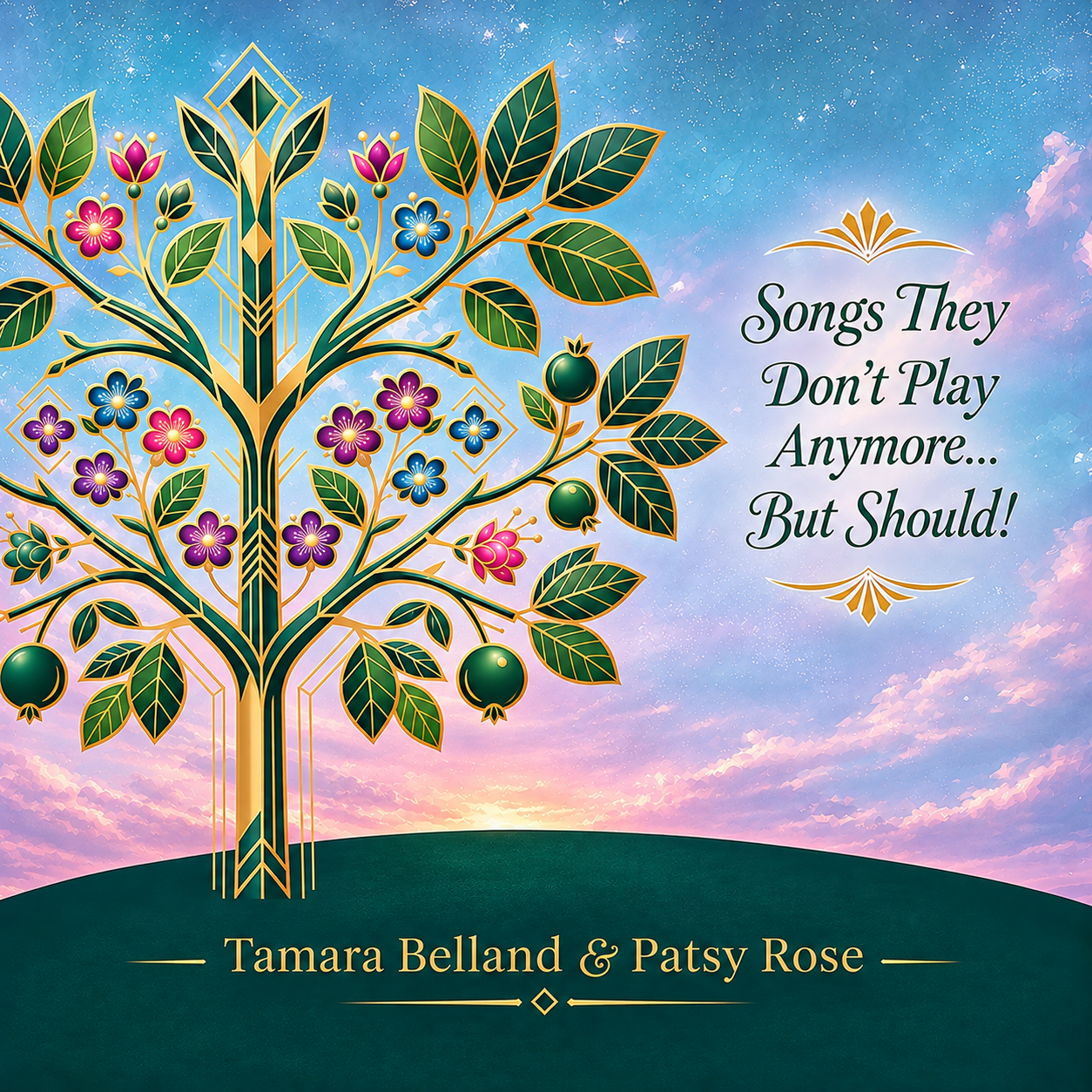
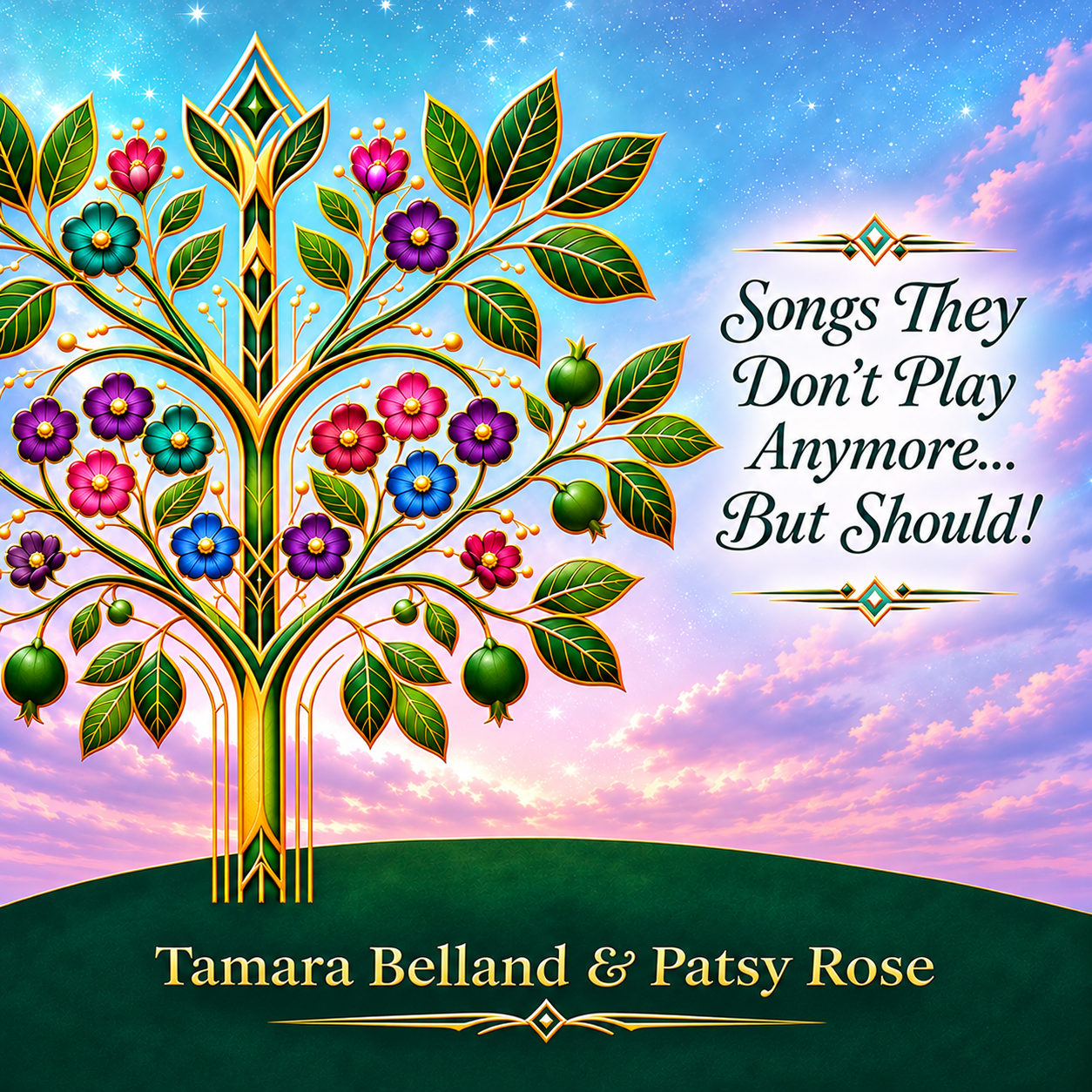
Download all six recordings performed by Tamara Belland and Patsy Rose, along with the album artwork and simple instructions for playing the music on your devices.
Enjoy these beloved songs whenever you wish!
Special Price for Seniors — $5.00
Enter discount code SENIOR at checkout.
Every Song Has a Story
Discover a little of the history behind these beloved songs, along with some personal reflections.
-
Irving Berlin wrote Blue Skies in 1926 for the Rodgers and Hart musical Betsy. The opening-night audience demanded 24 encores of the song! When singer Belle Baker forgot the lyrics during the final encore, Berlin sang them from his seat in the front row of the theater.
The following year, Al Jolson sang it in The Jazz Singer, one of the first feature films with synchronized singing and dialogue. Twenty years after the song was written, Bing Crosby and Fred Astaire starred together in the musical film Blue Skies, which premiered on October 16, 1946, and featured Crosby singing the song.
The version we recorded includes the original lyrics, which we think are fun and interesting to know. Beth Withrow joins us on backup vocals, almost like a little reminder echoing, “Yes, blue skies are shining on me!”
-
George and Ira Gershwin wrote ’S Wonderful for the 1927 Broadway musical Funny Face, starring Fred and Adele Astaire. George composed the music, and Ira came up with the playful lyrics.
Over the years, the song has been recorded by Ella Fitzgerald, Sarah Vaughan, Bing Crosby, Frank Sinatra, Diana Krall, Tony Bennett, João Gilberto and Ray Conniff, among others.
It appeared in An American in Paris in 1951, performed by Gene Kelly and Georges Guétary, and in the film version of Funny Face in 1957 (30 years after the original Broadway production!), performed by Fred Astaire and Audrey Hepburn.
-
Did you know that Home on the Range began as a poem written by a doctor in Kansas? His name was Brewster Higley, and he wrote it in the 1870s. His friend Daniel Kelley put it to music, and eventually it became one of America's best-known folk songs and the official state song of Kansas.
For our recording, we selected several of the lesser-known verses. They reflect the rich diversity of nature and give us a glimpse into what people who lived on the prairie saw and cherished.
You may encounter two unfamiliar words:
Curlew: A bird with a long, slender, downward-curving bill and a distinctive, haunting call.
Zephyr: A soft, gentle breeze.
To me, this song is about having a place where we feel at home, as well as the wide-open spaces where there's room to breathe and where life can be peaceful, “where seldom is heard a discouraging word.”
I think that's something many of us long for, wherever we happen to live.
-
Nobody knows exactly where Shenandoah came from. This old American folk song is associated with French-Canadian and American voyageurs and fur traders who traveled the rivers of North America, including the Missouri River. Later, the song became part of the repertoire of sailors at sea and is said to have been sung by pioneers traveling west in wagon trains.
Some versions tell of a trader longing for the daughter of the Oneida Chief Shenandoah. Over the years, many different versions of the words developed, but that beautiful melody has stayed with us.
There's something about this song that touches me every time I sing it. For me, it has a quality of longing. Perhaps it's longing for someone I love, for a place I remember, or even for something I have yet to discover.
-
Joyce Kilmer wrote his famous poem Trees in 1913, and Oscar Rasbach set it to music in 1922.
It's a poem that some modern literary critics might frown upon, not only for its anthropomorphism (attributing human qualities to things in nature), but also for its sometimes conflicting and sentimental imagery.
According to Kilmer's son, the poet wrote Trees between other writing tasks at a desk beside an upstairs window overlooking a wooded hill. I like imagining him sitting there, looking out among the trees.
Kilmer was a journalist, editor, lecturer and literary critic, and after the publication of this poem he became a nationally known lecturer.
So why bring this old sentimental song back?
It has to do with heart. I think the critics may have gone a little too far. To me, it feels like an inspired poem. Imperfections and all, there is a quality about it, especially when set to music, that I find heartwarming.
-
All Through the Night is based on a traditional Welsh melody, Ar Hyd y Nos, first published in 1784. A century later, in 1884, Sir Harold Boulton wrote the familiar English lyrics. This beautiful lullaby has been sung for generations.
I've always loved this melody, and I wanted to add something to it. So I wrote a third verse, which is why I've given our version the subtitle Something Wonderful Awakening.
I love the thought that while we're sleeping, life is still unfolding. We don't always know what's happening or what's coming next.
But perhaps something wonderful is already on its way—something we haven't even imagined yet.